Inside “On Brand”
with Jimmy Fallon
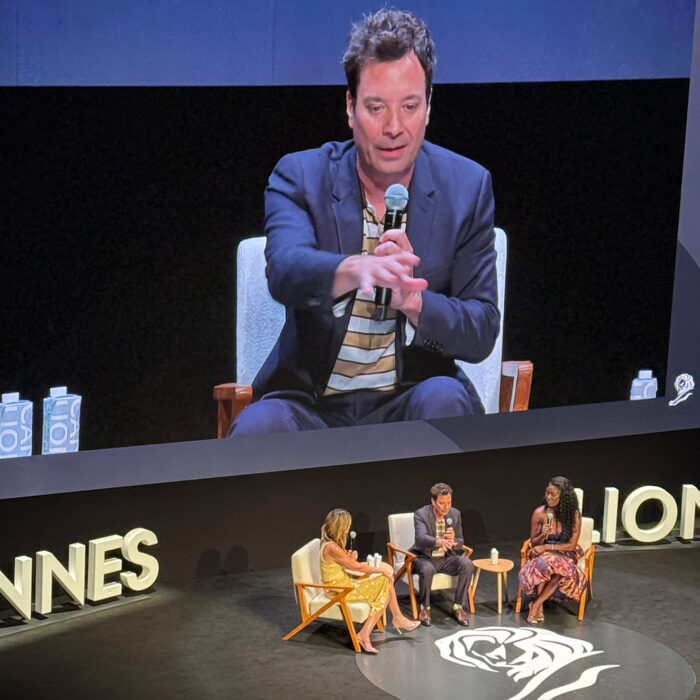
When Jimmy Fallon took the stage at Cannes Lions 2025, it wasn’t to accept an award or trade anecdotes with a moderator. He was there as the co-creator of On Brand with Jimmy Fallon — a competition format where everyday creatives develop real campaigns for real brands, and the winning ideas are actually produced in the real world. Blending late-night instinct with genuine marketing stakes.
On Brand turns the classic ad brief into entertainment. More than a format experiment, it offers a blueprint for how brands and creators can make advertising people genuinely want to watch.
Story
Patrick Weiss, Stefan Jermann, Reto Bloesch
Photography
Stefan Jermann
Pull Back the Curtain
One of the clearest arguments the show makes is against old-school product integration — the kind where a soda can appears on a table for ten seconds and everyone quietly agrees to pretend it means something. Fallon is openly dismissive of this logic. On Brand opts instead to make the brand itself the story, treating transparency not as a risk but as creative raw material. If a company stands for something, the show argues, why hide it? Say it plainly. That honesty can become part of the entertainment — not in spite of the audience’s intelligence, but because of it.
Start with Human Rituals
The Dunkin’ episode is a case study in why emotional truth outlasts cleverness. Among a field of wild, often absurd pitches, one contestant told the story of a grandfather who began every workday with a Dunkin’ coffee — framing the brand as fuel for doers, not dreamers. The room’s reaction was not laughter but something closer to recognition. Real people and real rituals remain the most powerful creative raw material available. The strongest campaigns feel lived-in rather than constructed, which is harder to fake than it sounds.
Embrace the Flops
On Brand doesn’t sanitize the creative process. Viewers see bad ideas, off-brand pitches, and the kind of awkward pauses that anyone who has sat in an agency war room knows well. This honesty is not incidental — it’s instructive. Prolific idea generation means accepting that most routes will be wrong before you find the one that works. Concepts like “munchbox” sit alongside ideas strong enough to anchor a Super Bowl spot. High creative variance isn’t a bug; it’s the engine. The willingness to fail in public is part of what makes the process credible.
Design for the Real World from Day One
Crucially, nothing on the show is hypothetical. Campaigns move from studio pitch to street: billboards go up, in-store activations appear, new products hit menus the day after broadcast. One contestant’s podcast concept went into production before the show had even premiered. This real-world accountability disciplines the creativity in a useful way — ideas must function not only as television moments but as viable marketing platforms across channels and over time. The distance between idea and execution, usually measured in months, collapses to almost nothing.
Let Humor Carry the Idea, Not Replace It
Fallon’s comedic instincts are everywhere in the format — spinning sunglasses become “spinnies,” a talk show becomes a theme-park ride — and yet the result remains credible advertising. The lesson is a subtle one: humor can be a delivery system for brand meaning, not a distraction from it, but only when the joke sits on top of a solid idea. Strip away the celebrity and the punchlines, and there still needs to be a clear, defensible role for the brand. Comedy without that foundation is just noise.
Honor the People Behind the Ideas
Finally, On Brand honors the creatives themselves. The grand prize — $100,000 — is meaningful, but the deeper reward is seeing your thinking move from pitch deck to billboard, from sketch to store shelf. For many contestants, it’s the first time an idea has made it into the world. With Fallon as creative ringmaster and Bozoma Saint John providing industry rigor, the show validates marketing as a serious craft while keeping it genuinely accessible. The message to brands and creatives alike is straightforward: when you respect the process and the people in equal measure, advertising can become the kind of content audiences actually seek out.